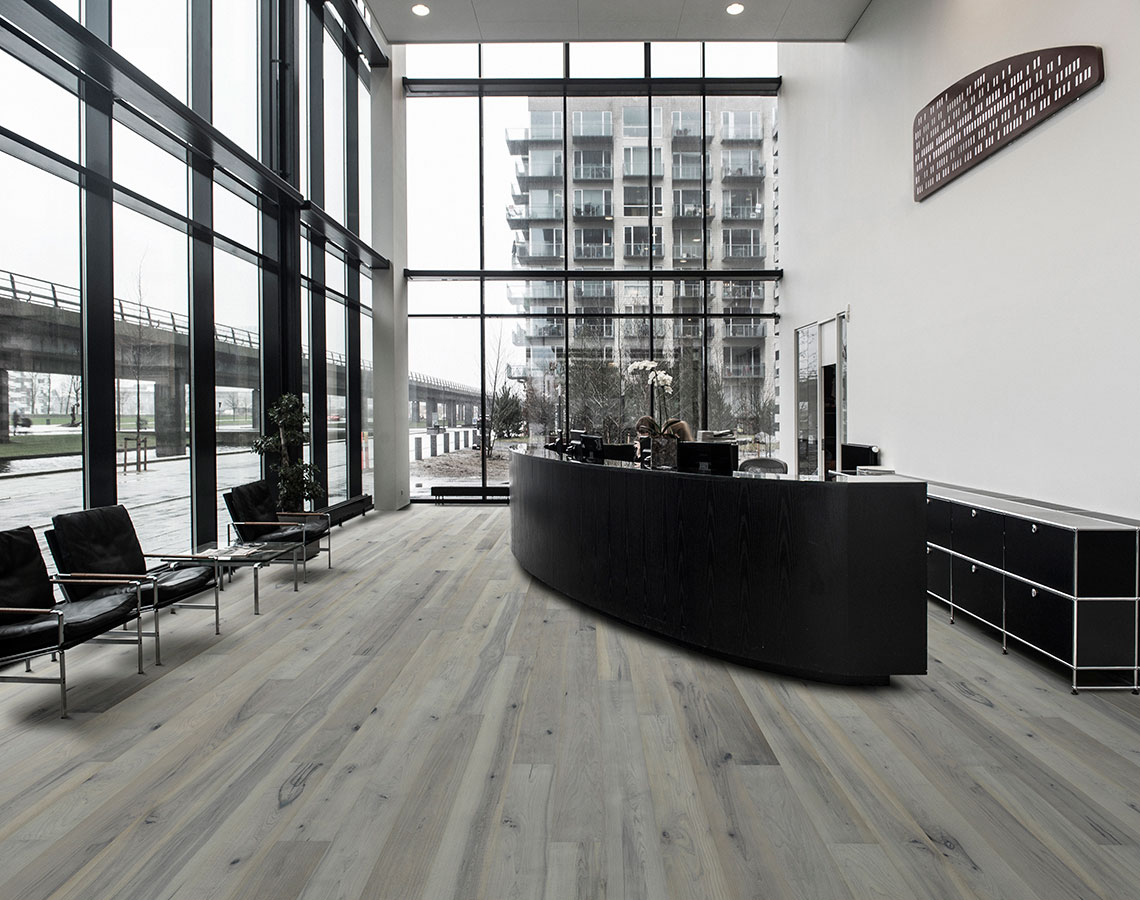
Hallmark Engineered Hardwood
The Arts & Science of Superior Flooring
Engineered hardwood flooring is often misunderstood as a modern substitute for solid wood, but it is better understood as a structural evolution. While traditional solid planking remains vulnerable to temperature shifts and moisture fluctuations, modern engineering transforms natural timber into a dimensionally stable, resilient surface.
Hallmark Floors approaches this discipline by pairing natural material selection with rigorous structural design. The result is a floor that balances artistic visual appeal with long-term mechanical performance.
The Art: Curating Natural Character & Surface Finish
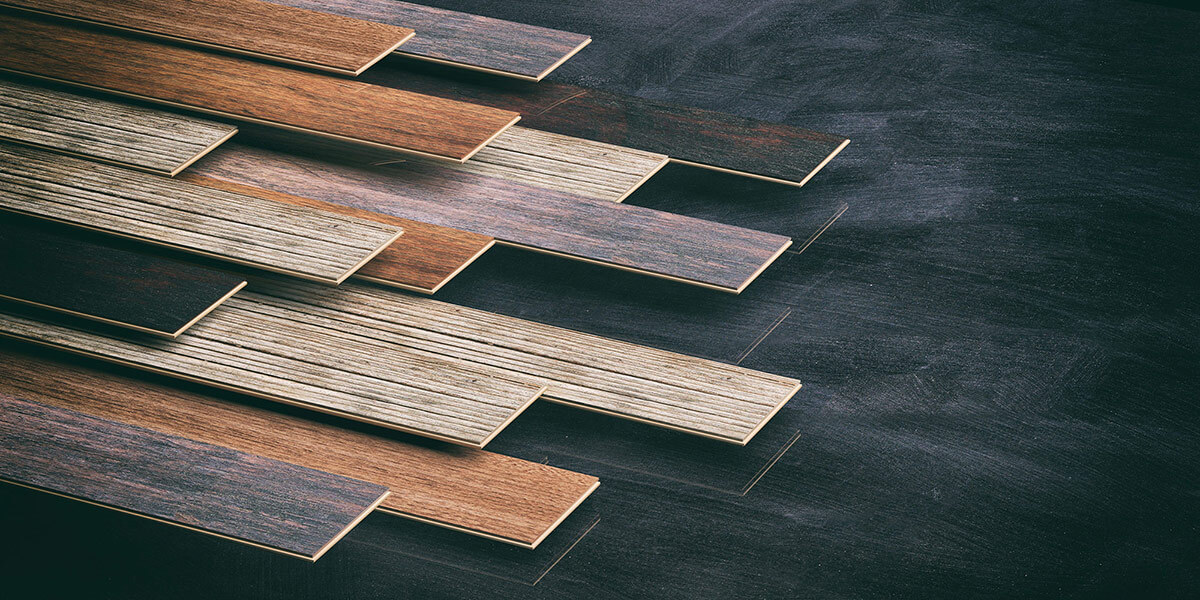
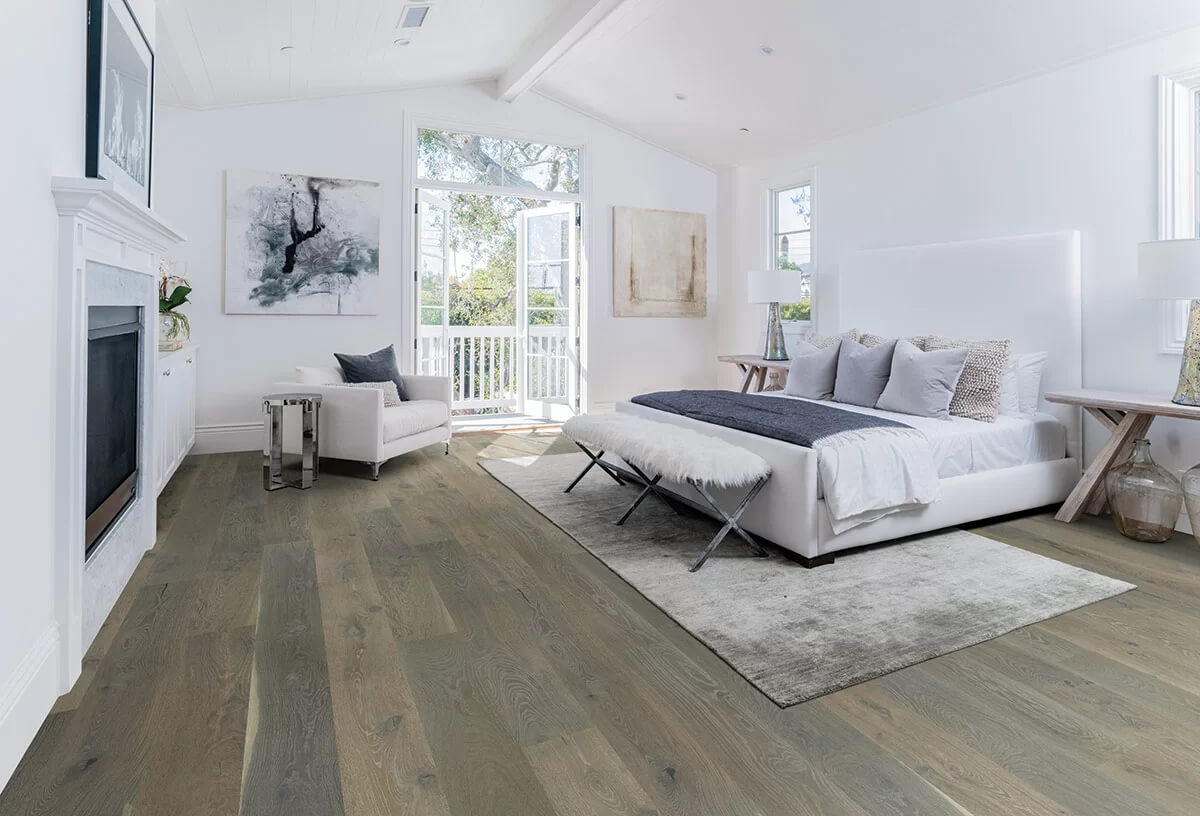
The surface of an engineered plank is raw timber, selected and finished to preserve the organic traits of the wood species.
-
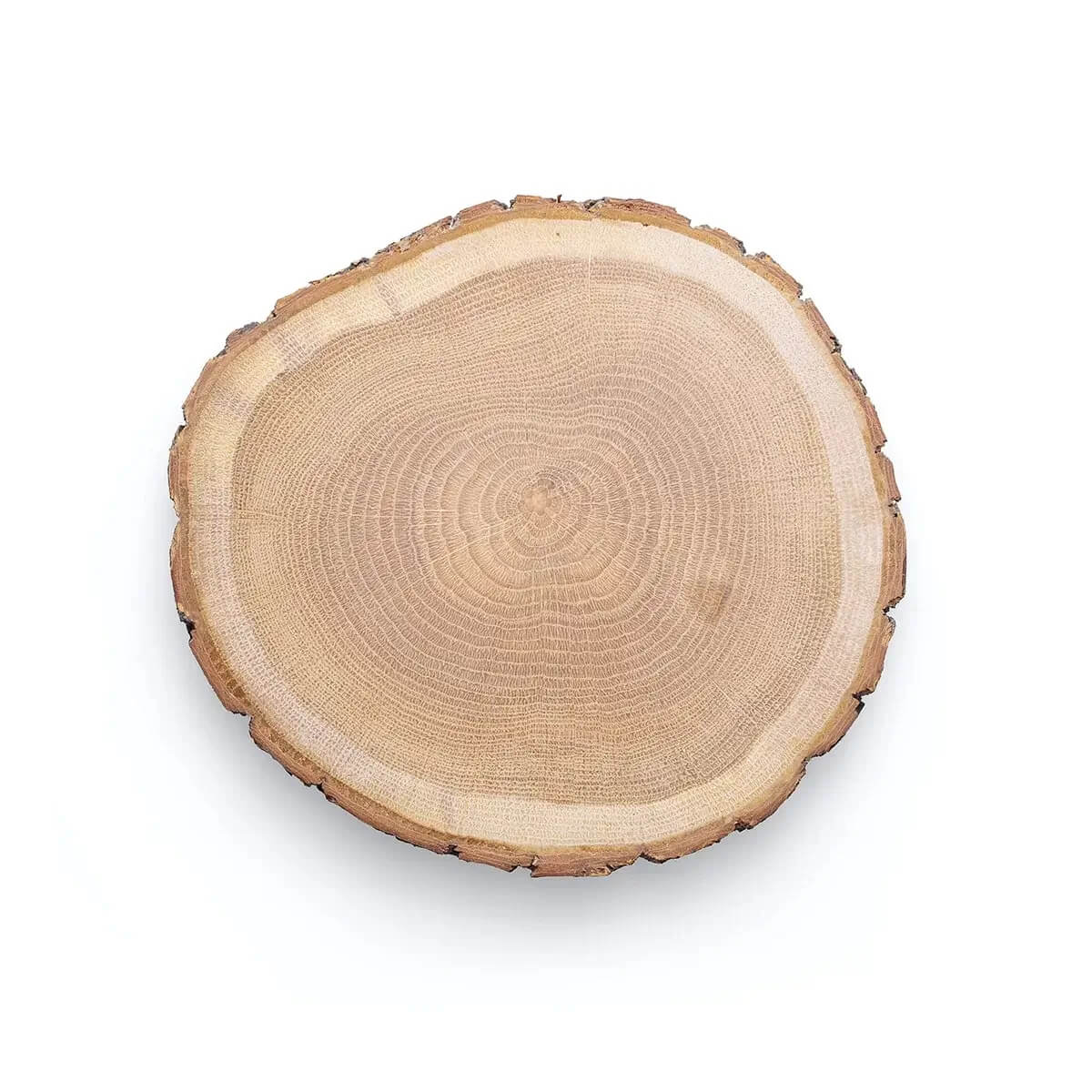
Timber Selection & Grain Profiling: Premium series favor species like European White Oak and American Hickory for their distinct grain architecture and high natural density. Careful slicing techniques preserve cathedral patterns and character marks while maintaining structural integrity across wide-plank profiles.
-
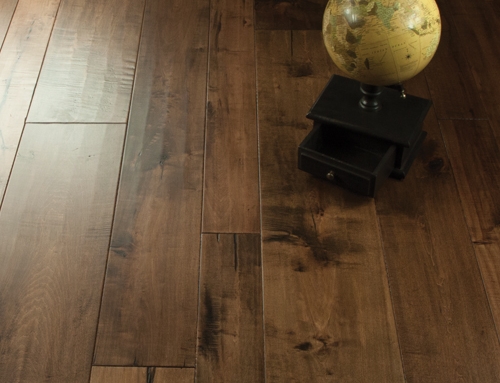
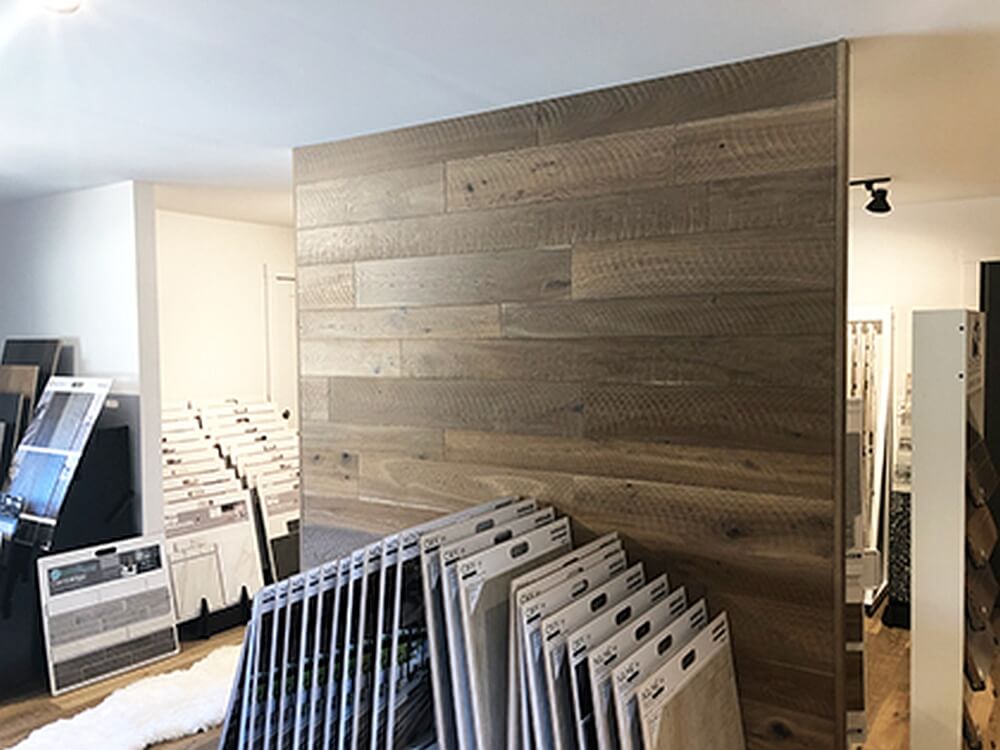
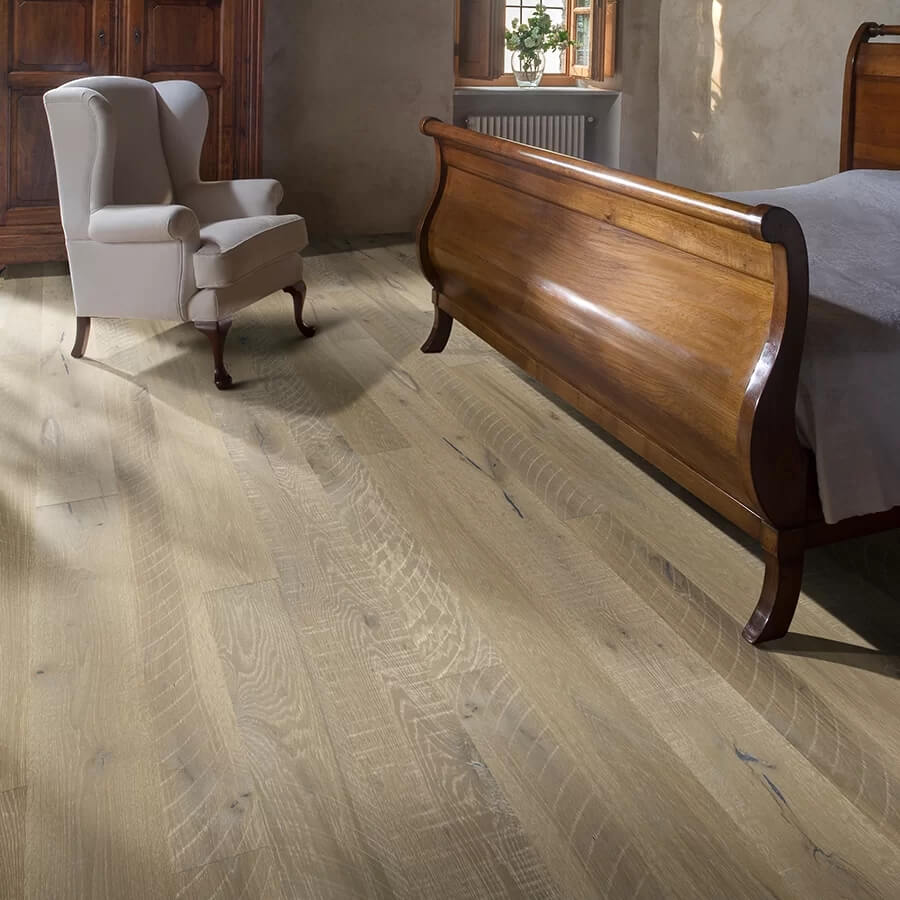
Surface Texturing Techniques: Rather than relying on uniform, machine-molded textures, surface finishes often employ hand-crafting methods—including light wire-brushing and subtle hand-scraping—to highlight the natural growth rings and soft grain of the wood.
-
Advanced Finish Formulations: Protective topcoats are applied in controlled, multi-layered applications. Premium finish systems, such as Nu Oil® or ultra-low sheen UV-cured urethane coatings, seal the wood fiber against stains and abrasion without obscuring the raw visual depth of the grain underneath.


The Science: Core Engineering & Dimensional Stability
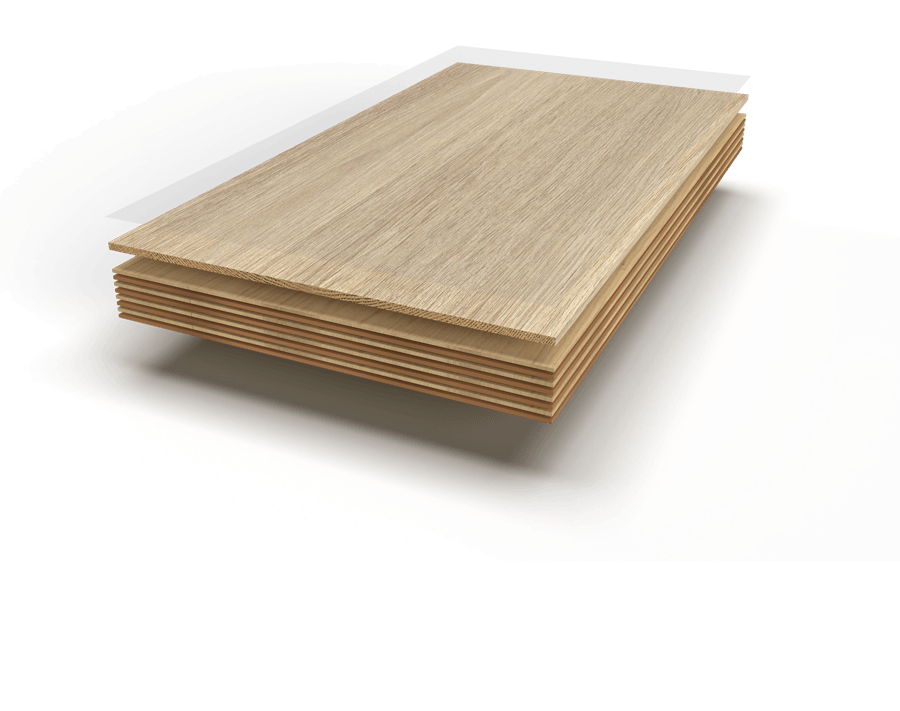
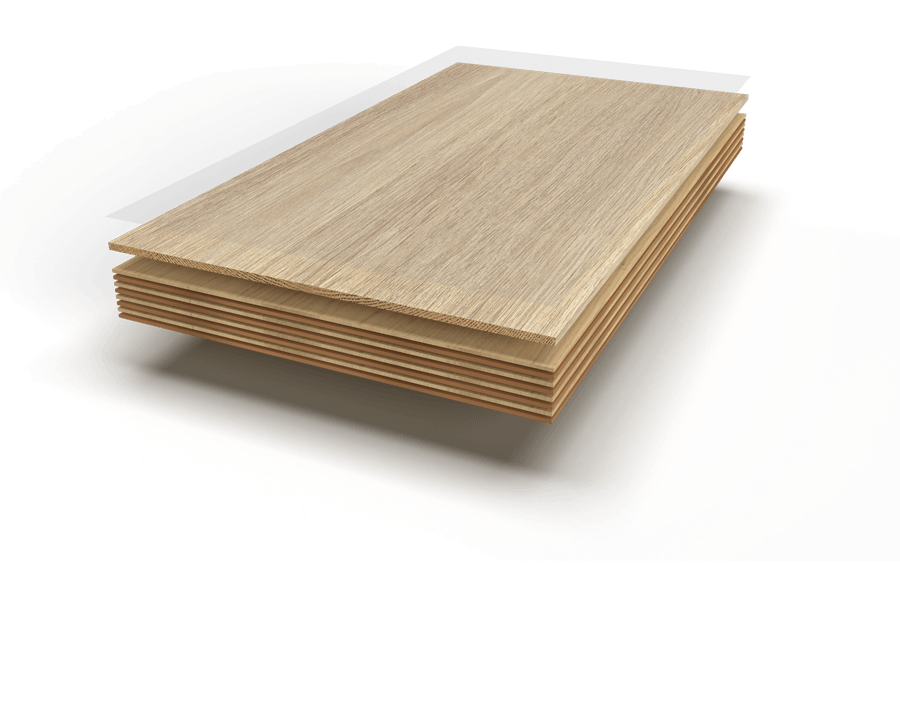
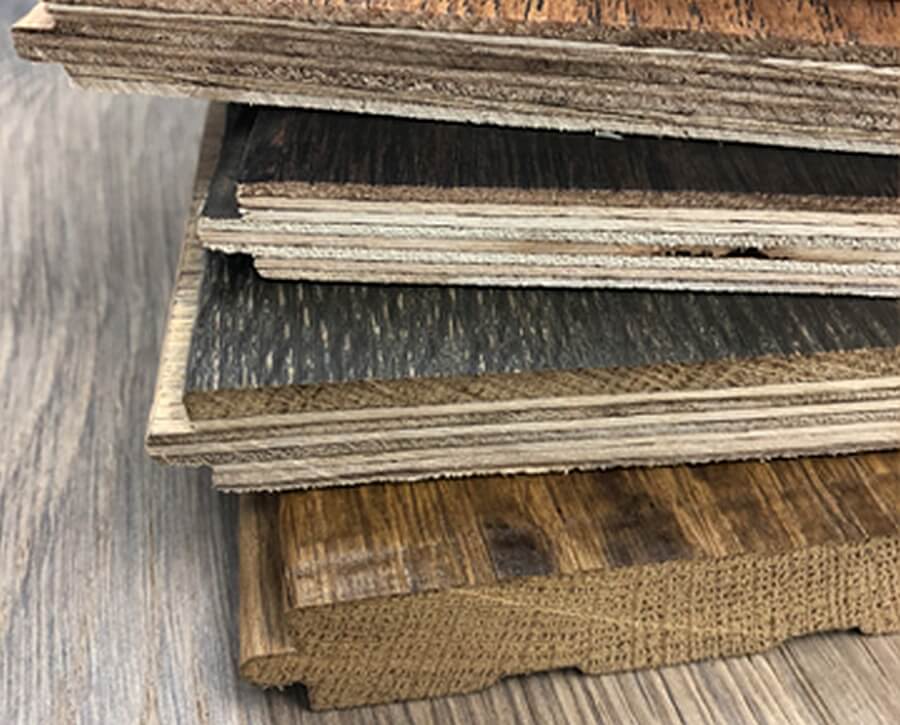
Beneath the decorative top layer lies a cross-ply structure designed to counter the natural movement of wood fibers exposed to humidity and heat changes.
+-------------------------------------------------------+
|  Top Wear Layer (Solid Hardwood Timber)              |
+-------------------------------------------------------+
|  Cross-Grain Core Layer 1 (Rotated 90°)              |
+-------------------------------------------------------+
|  Cross-Grain Core Layer 2 (Rotated 90°)              |
+-------------------------------------------------------+
|  Stabilizing Backing Veneer                          |
+-------------------------------------------------------+
| Structural Component | Engineering Function | Technical Advantage |
| Wear Layer (Lamella) | Premium solid hardwood top layer | Provides authentic look and feel; offers sand-and-refinish capacity depending on thickness. |
| Multi-Ply Core Structure | Alternating layers of high-density plywood running at 90° angles | Neutralizes natural expansion and contraction forces, preventing warping, cupping, and gapping. |
| Precision Precision Profile | Milled tongue-and-groove or locking joinery | Ensures tight seams, consistent alignment, and smooth installation across large floor spans. |
| Balanced Backing Layer | Bottom veneer layer applied under uniform tension | Seals the core underside to prevent moisture absorption from subfloors. |

Performance in Practical Home Environments
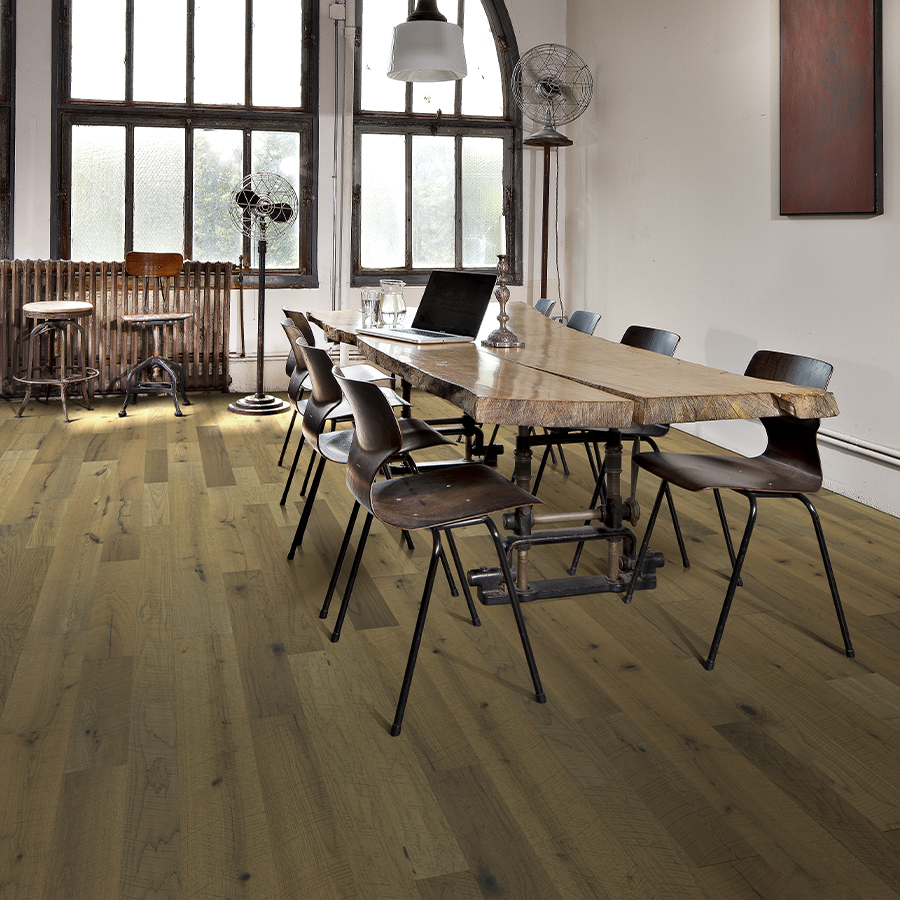
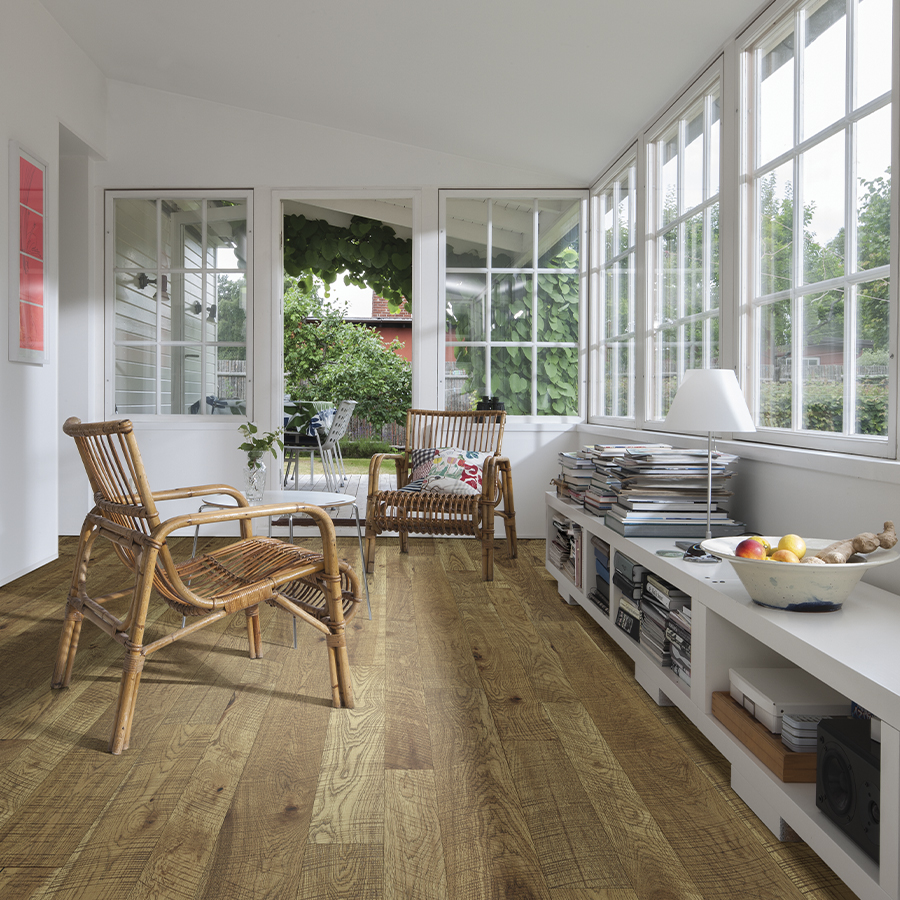
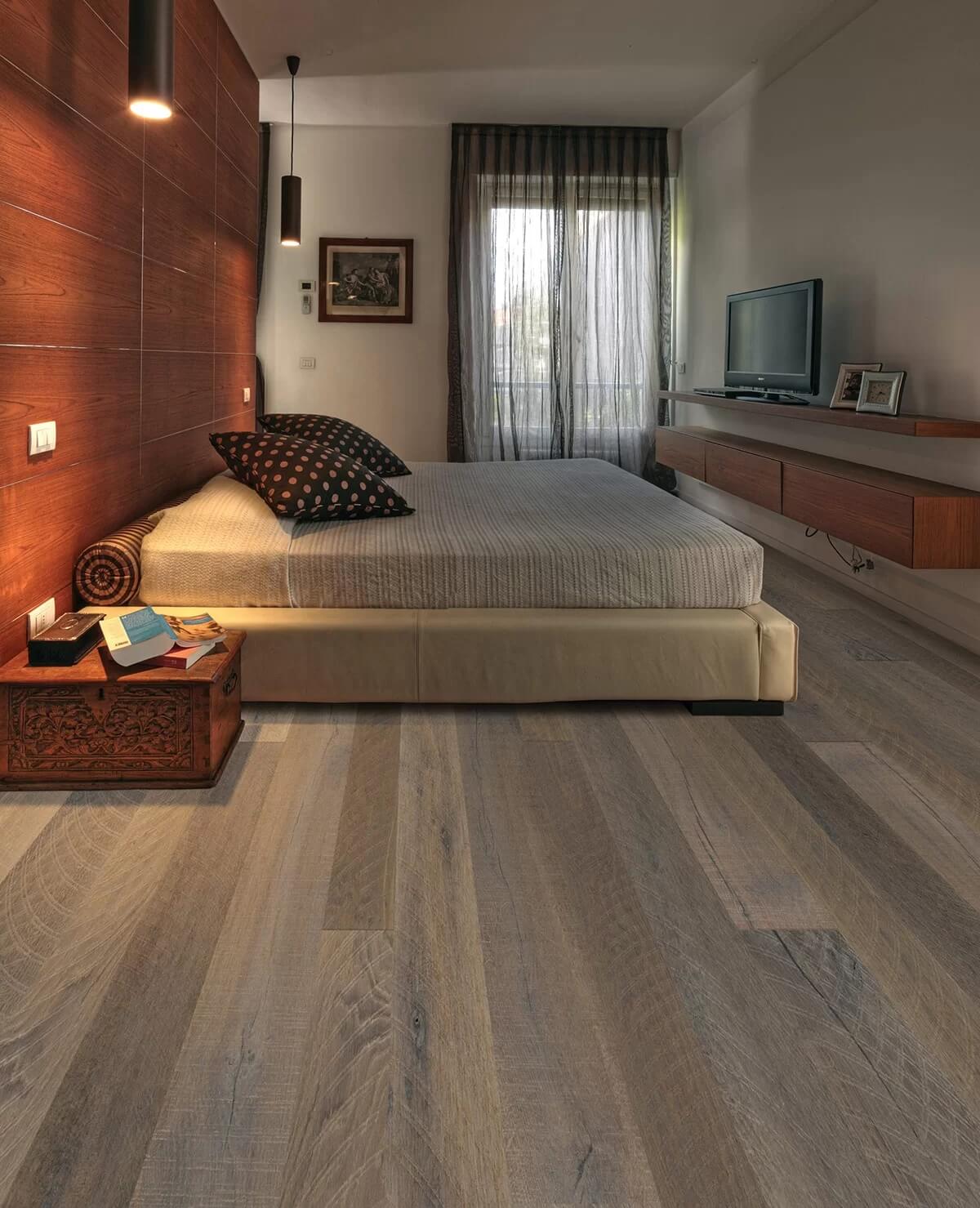
By combining natural aesthetics with structural stabilization, engineered hardwood expands where real timber can be safely installed in home settings:
-
Subfloor Compatibility: Unlike solid hardwood, which generally requires a wood subfloor, engineered planks can be safely installed directly over concrete slabs, plywood, or acoustic underlayments.
-
Grade-Level Flexibility: Suitable for installation below, on, or above grade, making real wood viable for basements, high-rise condominiums, and ground-floor living areas.
-
Radiant Heat Tolerance: The multi-ply core construction distributes thermal energy evenly without causing boards to shrink, dry out, or split over active radiant heating systems.
Inside the Engineered Wood
The Internal Structure, Composition and Sourcing
To evaluate an engineered wood floor, looking beyond the surface grain is essential. The strength, safety, and longevity of a plank depend on two critical factors: where the timber originates and how its internal layers are bonded.
1. Timber Sourcing & Specie Selection
Hallmark Floors selects specific natural timber species for their structural density and aesthetic characteristics, sourcing raw materials through controlled harvesting networks.
| Timber Specie | Primary Origin | Key Physical Traits | Typical Application |
| European White Oak | Temperate Forests of Western & Central Europe | Dense, tight growth rings; high tannin content; exceptional dimensional stability. | Wide-plank series, wire-brushed finishes, and reactive stain profiles. |
| North American Hickory | Eastern & Central United States | High Janka hardness (~1820 lbf); heavy, dense grain structure resilient to high impact. | Heavy-foot-traffic collections; hand-sculpted, rustic textures. |
| North American Hard Maple | Northeastern United States & Canada | Fine, closed grain profile; uniform density; clean aesthetic. | Contemporary, smooth-surface collections with low-sheen protective coats. |
2. Anatomical Layering & Material Composition
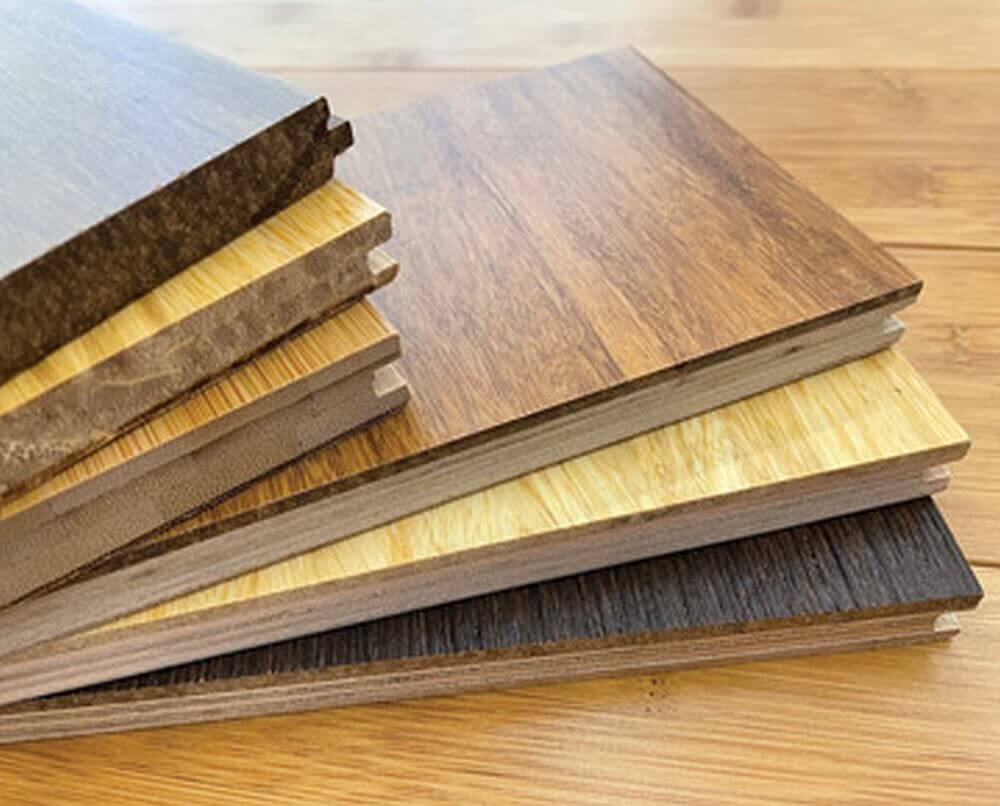
An engineered plank is a balanced composite structure designed to neutralize the natural swelling and shrinking forces inherent in solid wood.
+-----------------------------------------------------------------------+
|  1. WEAR LAYER: Solid Sawn or Slice-Cut Timber (1.2mm – 4.0mm+)       |
+-----------------------------------------------------------------------+
|  2. CORE: TrueCore® High-Density Hardwood Centerply (Multi-Ply)       |
+-----------------------------------------------------------------------+
|  3. BACKING: Balanced Hardwood Stabilizing Veneer                     |
+-----------------------------------------------------------------------+
A. The Wear Layer (Lamella)
The top layer consists of a solid piece of hardwood timber. Depending on the collection, Hallmark utilizes two primary cut types:
-
Sawn-Cut Veneers: Thicker, premium slices (up to 4.0mm+) cut straight from the log, preserving the exact visual character, cell structure, and feel of traditional solid timber. These provide sand-and-refinish capacity over time.
-
Slice-Cut Veneers: Precision-sliced layers (typically 1.2mm to 1.5mm) that maximize yield from slow-growing hardwoods, bonded to a high-stability base.
B. The TrueCore® Centerply (The Engine)
While standard engineered floors often use softwoods (such as pine or poplar) or mixed species for their cores, Hallmark utilizes an all-hardwood core called TrueCore® Centerply.
-
Material: 100% genuine hardwood plies stacked in alternating 90-degree cross-grain directions.
-
Manufacturing Process: Center veneers undergo a dual-stage process—first cold-pressed to align the plies, then hot-pressed under immense pressure and heat. This process compresses the wood fibers into a dense, moisture-resistant structural block.
C. The Stabilizing Backing
The bottom layer consists of a solid wood backing veneer applied under uniform tension. This layer balances the tension of the top wear layer, sealing the underside to prevent moisture vapor from the subfloor from causing board deflection.
3. Adhesive Technology & Indoor Air Quality
The performance of multi-ply construction depends heavily on the adhesives used to bond the layers together.
-
Marine-Grade Adhesives: Layers are bonded using TSCA Title VI-compliant marine-grade adhesives designed to withstand moisture exposure without delaminating.
-
Strict VOC & Formaldehyde Compliance: To protect indoor air quality, the manufacturing process avoids added harmful chemicals. Products meet or exceed EPA TSCA Title VI and CARB II standards, keeping emissions exceptionally low and matching or undercutting natural baseline levels found in rural outdoor air.
Suggested Videos