Engineered Wood: The Optimal Flooring Material for Modern Homes
–
–
–
–
–
–
–
–
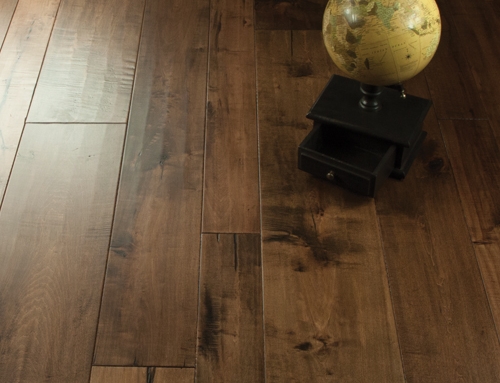
While both solid wood and engineered wood flooring offer the undeniable beauty and warmth of a natural wood floor, engineered wood often proves to be the superior choice for modern homes due to its enhanced stability, versatility, and efficiency. The key to understanding this lies in the fundamental difference in their construction.
Comparing solid wood with engineered wood.
A comprehensive comparison of engineered wood and solid wood reveals that while they may appear similar on the surface, their fundamental differences in composition, properties, and applications lead to distinct advantages and disadvantages. The choice between them depends heavily on the specific project, budget, and desired long-term performance.
The solid wood.
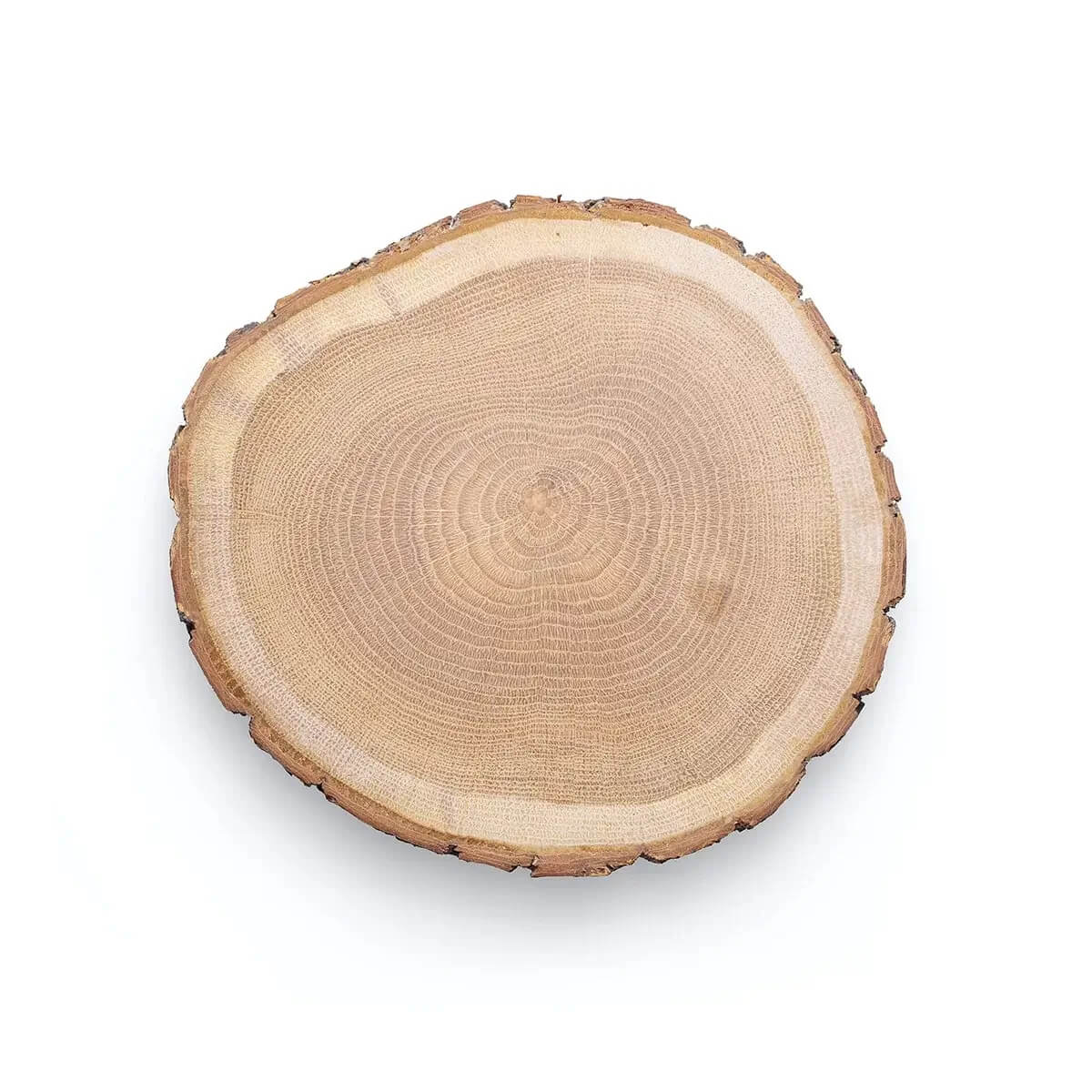
Solid wood, as the name implies, is lumber milled directly from a single piece of a tree. It is a traditional material prized for its natural beauty, durability, and a classic aesthetic that can appreciate with age.
ADVANTAGES OF SOLID WOOD
☑ Aesthetics: Solid wood has a unique, natural grain pattern that is consistent throughout the piece. Each item is one-of-a-kind, adding warmth and character to a space.
☑ Durability and Longevity: Solid wood is exceptionally durable and, with proper care, can last for generations. It can withstand significant wear and tear.
☑ Refinishing Potential: A major advantage of solid wood, especially for flooring and furniture, is that it can be sanded down and refinished multiple times to remove scratches, dents, and stains, essentially restoring it to a new condition.
☑ Strength: Solid wood, particularly hardwoods like oak, maple, and cherry, has excellent structural strength and can be used for load-bearing applications.
☑ Eco-Friendliness: As a natural, renewable resource, solid wood is biodegradable. It is also often seen as a more sustainable choice, as it doesn’t contain the adhesives and chemicals found in some engineered wood products.
HARD LUMBER
DISADVANTAGES OF SOLID WOOD
☒ Susceptibility to Environmental Changes: Solid wood is a hygroscopic material, meaning it absorbs and releases moisture. Changes in humidity and temperature can cause it to expand, contract, warp, or crack. This makes it a poor choice for high-moisture areas like basements or bathrooms.
☒ Cost: Solid wood is generally more expensive than engineered wood due to the resources and time required to harvest and process it.
☒ Weight: It is a dense and heavy material, making solid wood furniture difficult to move.
☒ Maintenance: Solid wood requires regular maintenance, such as cleaning and polishing, to preserve its finish and prevent damage.
The engineered wood.
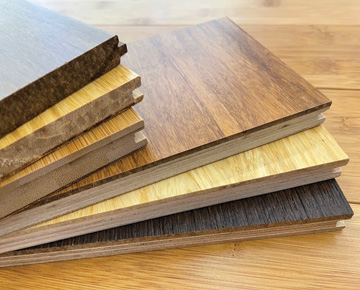
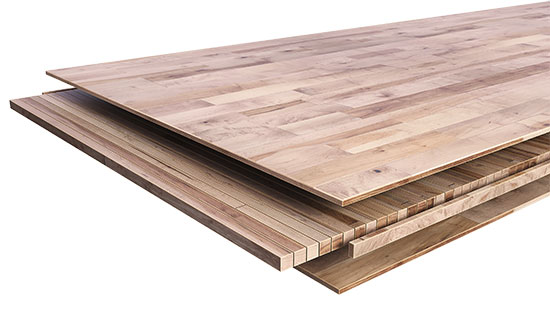
Engineered wood is a man-made product composed of multiple layers of wood and other materials bonded together with adhesives under heat and pressure. The top layer is a thin veneer of real wood, giving it the appearance of solid wood. The core layers can be plywood, high-density fiberboard (HDF), or other composite materials.


ADVANTAGES OF ENGINEERED WOOD
☑ Dimensional Stability: The cross-grain arrangement of the layers in engineered wood makes it highly stable and resistant to the warping, cupping, and splitting that can affect solid wood. This stability makes it a good option for locations with varying humidity levels.
☑ Moisture Resistance: While not waterproof, engineered wood is more resistant to moisture and humidity than solid wood. This makes it a viable choice for areas like basements where solid wood would not be recommended.
☑ Cost-Effectiveness: Engineered hardwood is often more affordable than solid wood, as it utilizes a thinner layer of the more expensive hardwood on the surface, with less expensive materials for the core.
☑ Wider Planks: Engineered hardwood is often available in wider planks at a lower price point than solid wood.
☑ Easy Installation: Many engineered wood products, particularly flooring, are designed for easier, DIY-friendly installation methods like click-lock systems.
☑ Eco-Friendliness: Engineered hardwood makes more efficient use of wood resources, as it can be made from smaller or lower-grade wood materials that would otherwise go to waste.
DISADVANTAGES OF ENGINEERED WOOD
☒ Limited Refinishing: The top veneer layer of engineered hardwoodwood is thin, which means it can only be sanded and refinished a limited number of times, if at all. This significantly reduces its overall lifespan compared to solid wood.
☒ Durability: While a good-quality engineered wood product is durable, some lower-quality versions with a thin veneer and a less robust core may be more prone to dents, chipping, and other damage.
☒ Potential for Delamination: In extremely dry conditions, the veneer on engineered wood can delaminate or split, requiring board replacement.
☒ Chemicals: The adhesives used to bond the layers of engineered wood may contain volatile organic compounds (VOCs) that can off-gas into the air. However, formaldehyde-free options are available.
☒ Hollow Sound: When installed as a floating floor, engineered wood can sometimes produce a hollow sound, which some people may find undesirable.
Why engineered wood is the optimal flooring material
for the modern home
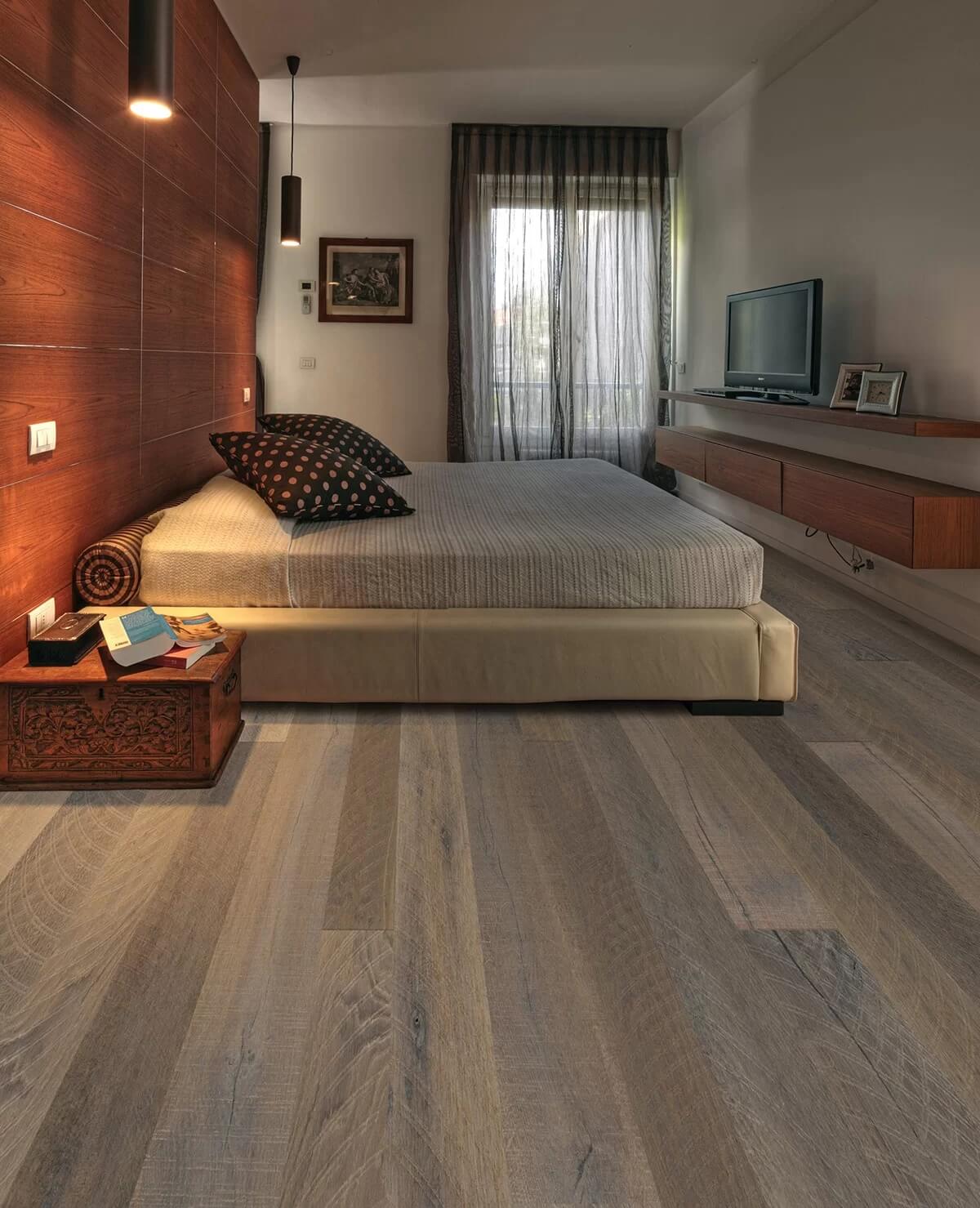
Engineered wood has emerged as a top choice for flooring in modern homes due to its combination of aesthetics, durability, and practicality. While it provides the beautiful, timeless look of solid hardwood, its unique construction addresses many of the limitations of traditional wood flooring, making it a superior option for contemporary living.
Here’s a breakdown of why engineered wood is the optimal flooring material for modern homes:
➀ SUPERIOR STABILITY AND MOISTURE RESISTANT
The most significant advantage of engineered hardwood flooring is its enhanced stability. Unlike solid hardwood, which is a single piece of wood, engineered hardwood is constructed with multiple layers of wood veneers or high-density fiberboard (HDF) bonded together. The layers are arranged in a cross-hatched pattern, which creates a highly stable core that is far less susceptible to warping, gapping, or cupping caused by fluctuations in temperature and humidity. This makes engineered wood a suitable choice for:
- Kitchens and basements: Areas with higher moisture levels that would be problematic for solid hardwood.
- Homes with underfloor heating: Solid wood can warp and shrink when exposed to heat, while engineered wood’s construction makes it compatible with these systems.
- Concrete slabs: Engineered wood can be glued down directly to a concrete subfloor, a method not recommended for solid wood.
➁ AESTHETICALLY VERSATILE AND MODERN
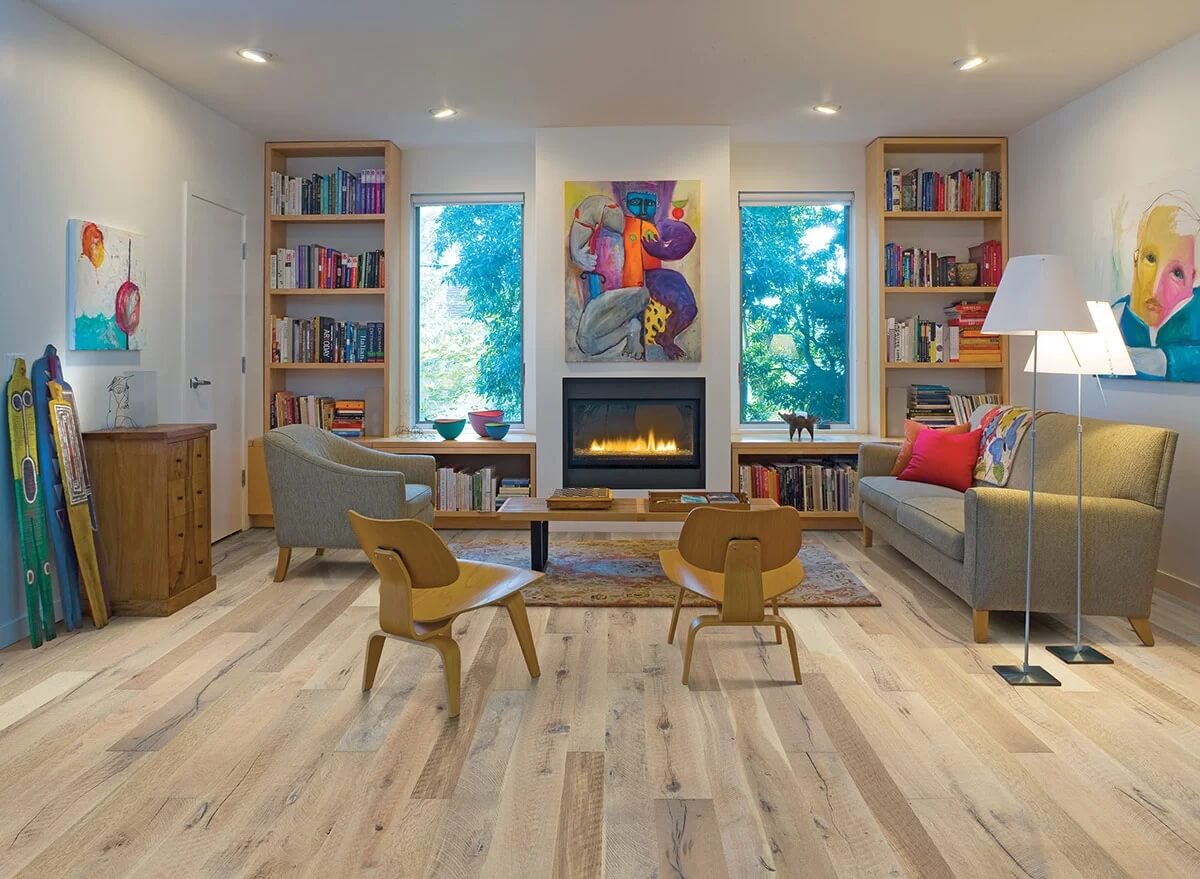
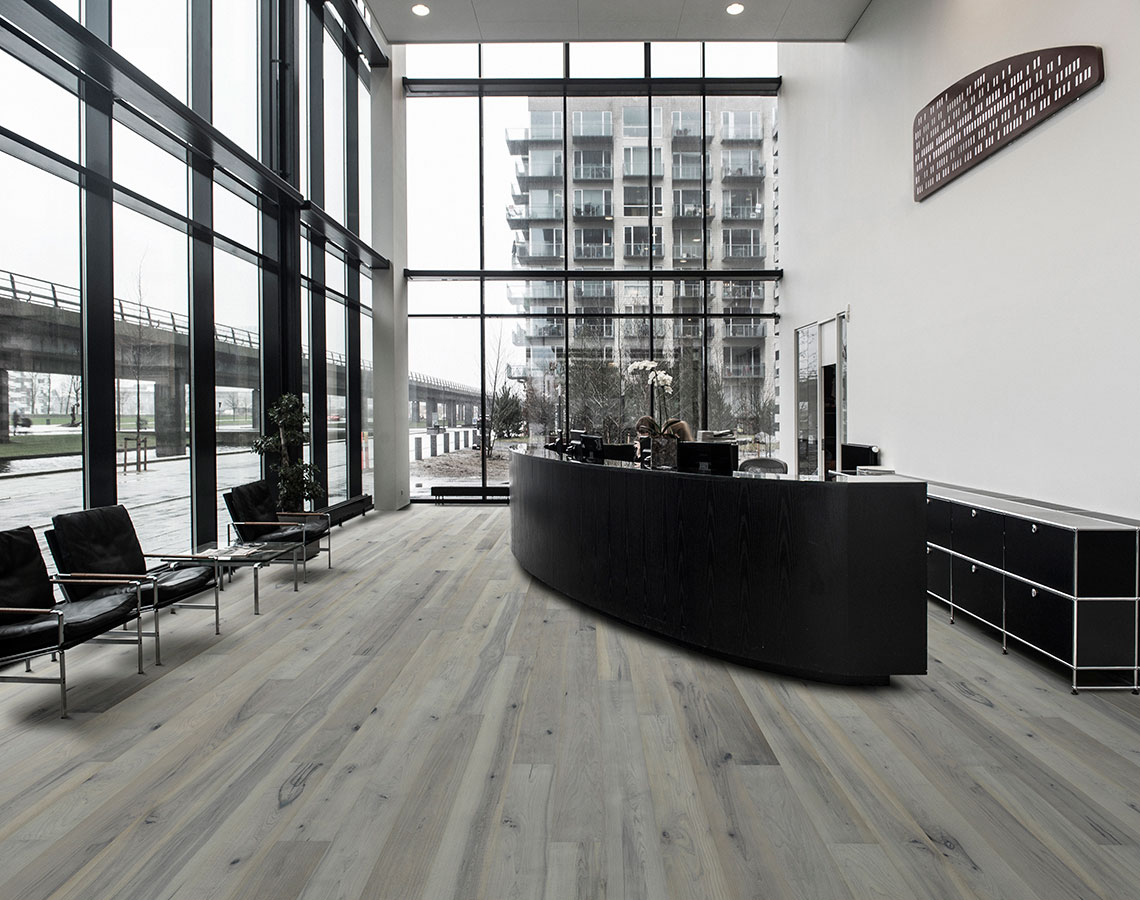
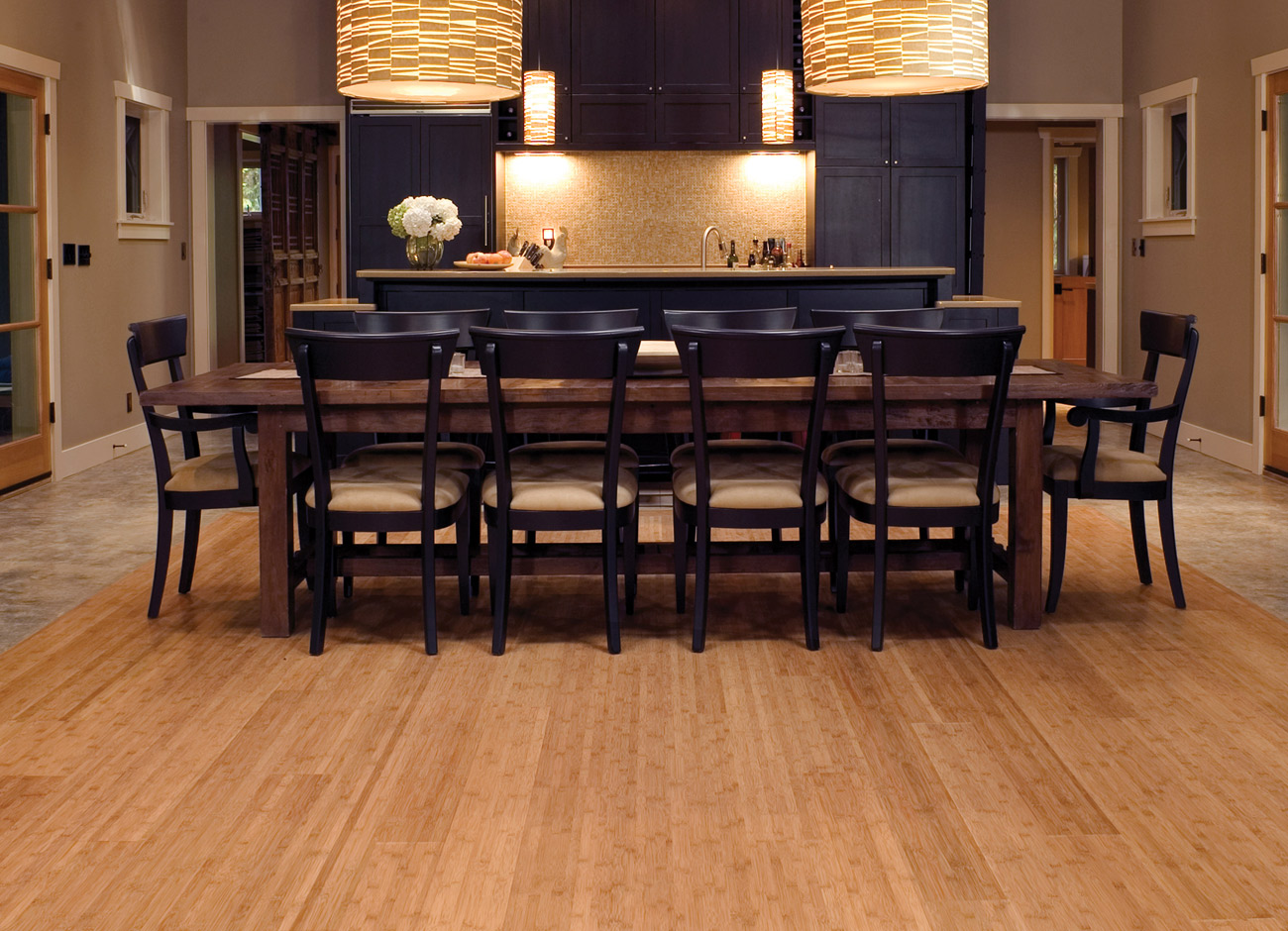
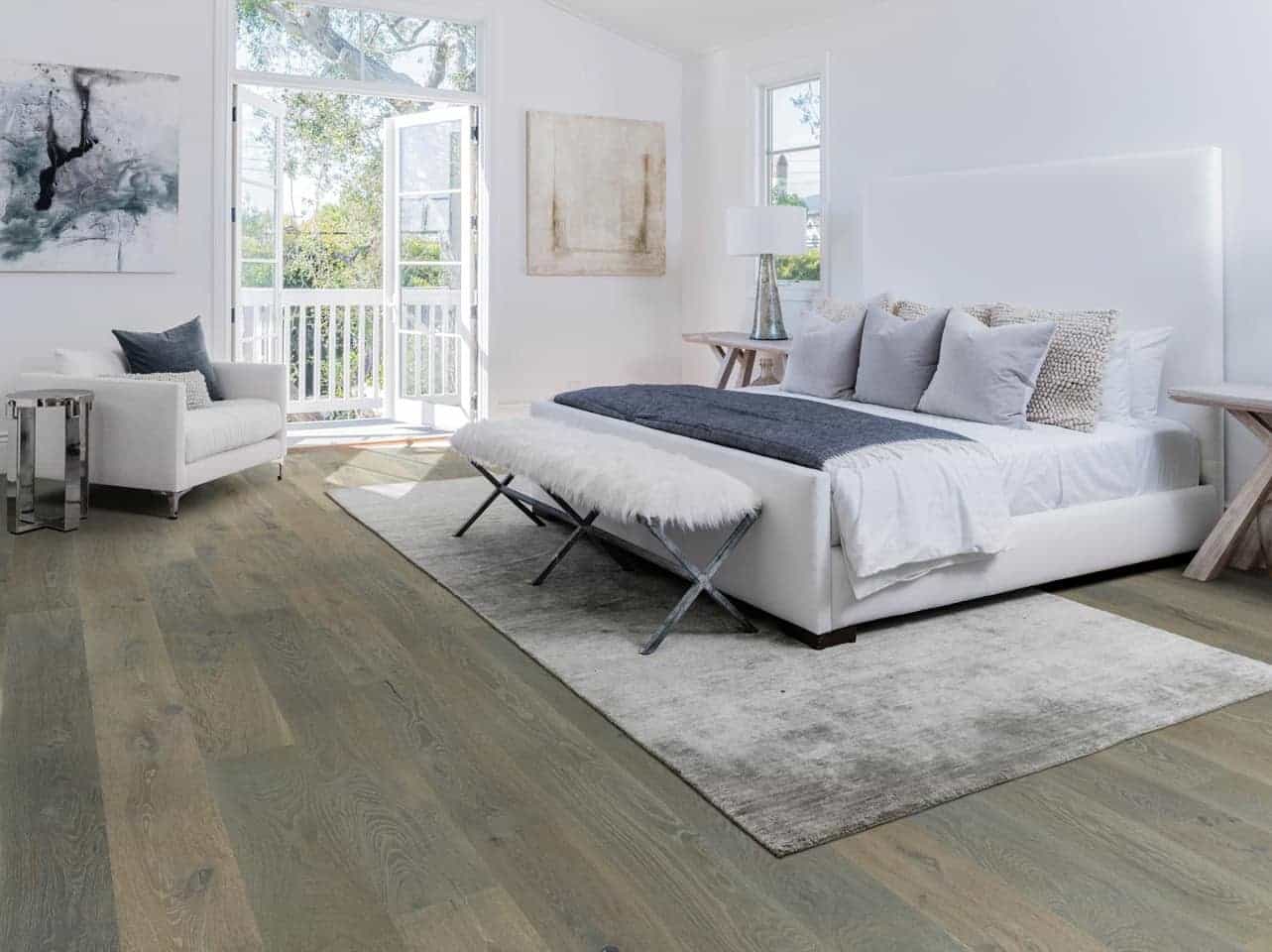
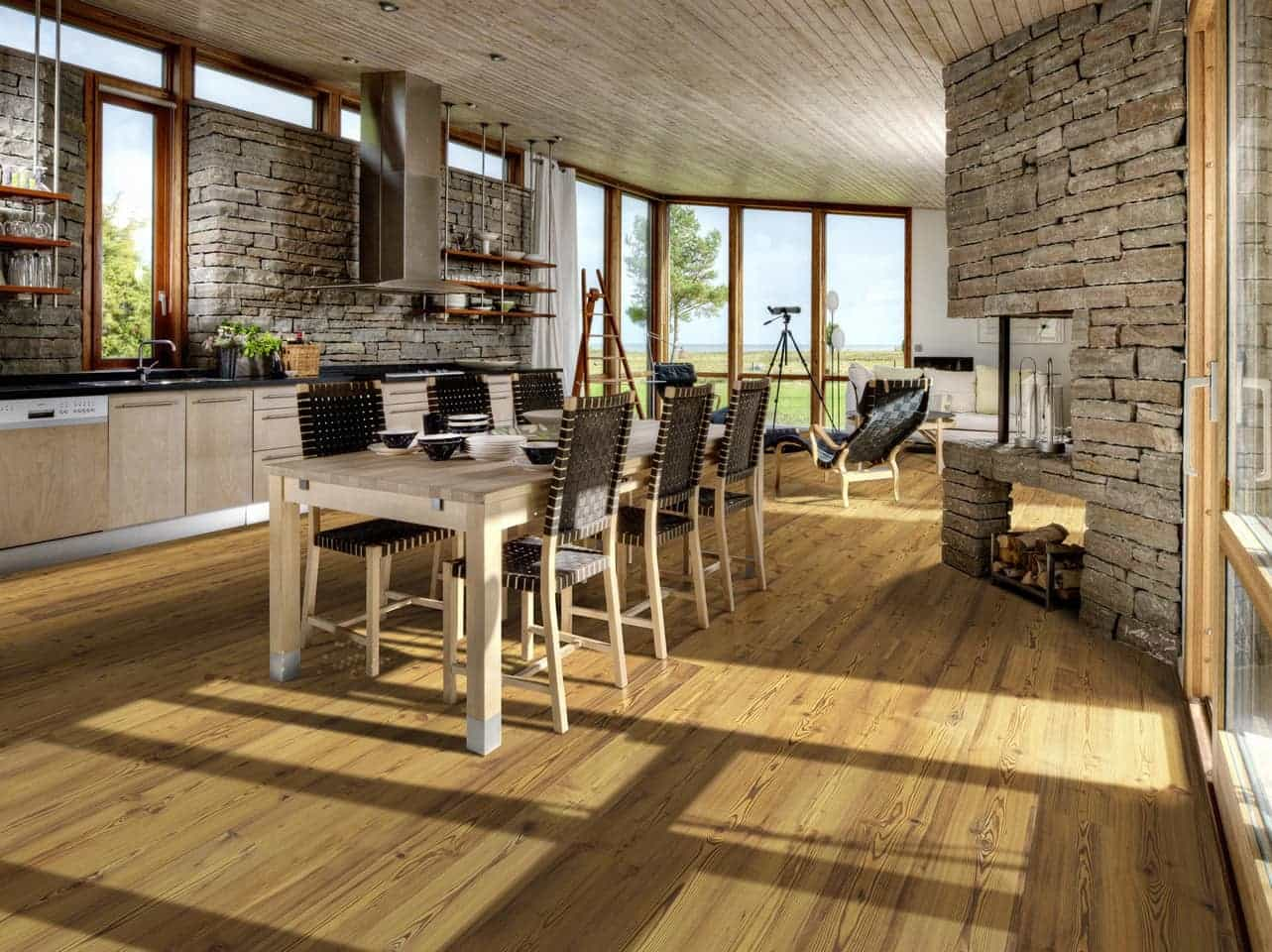
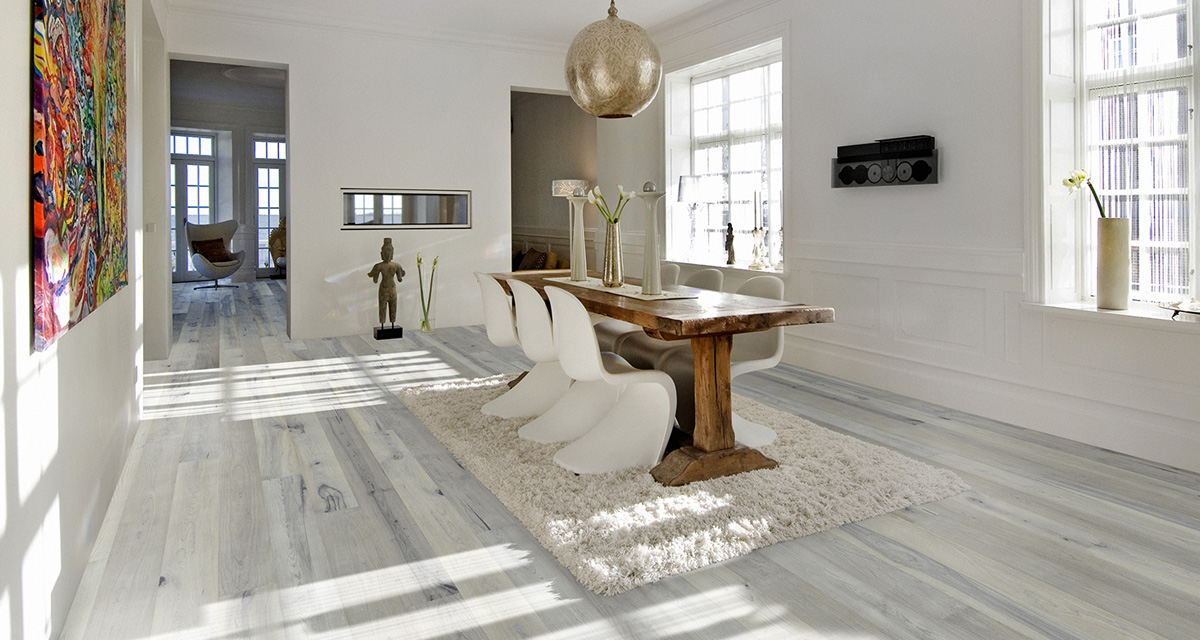
The top layer of engineered hardwood is a real hardwood veneer, which means it looks and feels identical to solid hardwood. This gives you the elegance and warmth of natural wood, but with greater design flexibility. The dimensional stability of engineered wood allows manufacturers to create wider and longer planks, a popular trend in modern interior design that creates a more expansive and contemporary feel in a room. Engineered wood also comes in a vast array of species, colors, and finishes, making it easy to find a style that perfectly complements your home’s décor.
➂ COST-EFFECTIVE AND SUSTAINABLE
Engineered hardwood is often more affordable than solid hardwood, especially for comparable wood species and plank sizes. This is because only the top layer is a high-grade hardwood, while the core is made from fast-growing, more economical wood. This manufacturing process also makes engineered wood a more sustainable choice, as it uses less of the slow-growing hardwood tree per plank.
➃ DURABILITY AND EASY MAINTENANCE
Engineered hardwood is built to withstand the demands of a busy household. Its multi-layered structure and factory-applied, durable finishes resist dents, scratches, and everyday wear and tear. While it’s not indestructible, it is more resistant to these issues than solid wood. Maintenance is straightforward, requiring only simple sweeping, vacuuming, and occasional damp mopping. Many engineered wood floors can also be sanded and refinished a limited number of times, extending their lifespan and allowing you to refresh their look.
➄ SIMPLE INSTALLATION
Engineered wood offers more flexible installation methods than solid hardwood. It can be installed as a floating floor using a click-lock system, or it can be glued or nailed down. This ease of installation can save you time and money, making it a more DIY-friendly option and simplifying the process for professional installers. It can also often be installed over existing flooring, which can be a significant advantage in renovation projects.
Engineered Wood is the Best Optimal Flooring!
Choosing the right flooring is one of the most significant decisions a homeowner can make. It sets the tone for the entire interior, impacts property value, and dictates the long-term maintenance of the space. While solid hardwood was once the gold standard, engineered wood has emerged as the superior choice for the modern era, balancing timeless aesthetics with advanced structural integrity.
Understanding the Build: What is Engineered Wood?
Unlike solid wood, which is a single plank of timber, engineered wood is a high-tech composite. It consists of a top layer of real hardwood (the “wear layer”) bonded over multiple layers of plywood or high-density fiberboard (HDF). These layers are stacked in a cross-grain configuration and fused under intense heat and pressure.
This specific construction isn’t just about saving material; it’s a deliberate design choice to counteract the natural “breathing” of timber.
The Advantage of Dimensional Stability
The primary challenge with solid wood is its sensitivity to environmental changes. Wood naturally expands and contracts with fluctuations in humidity and temperature, which can lead to warping, cupping, or gaps between planks.
Engineered wood solves this through its cross-ply construction. Because each layer runs perpendicular to the one above it, the layers “lock” each other in place. This dimensional stability makes it the optimal choice for:
-
Basements: Where moisture levels are typically higher.
-
Kitchens: Where spills and humidity are frequent.
-
Radiant Heating Systems: It can withstand the direct heat without cracking or buckling.
Sustainability and Environmental Impact
In a world increasingly focused on eco-friendly building practices, engineered wood stands out as a more sustainable alternative to solid timber.
-
Efficient Timber Use: The core layers are often made from faster-growing trees or recycled wood fiber, reserving slow-growing hardwoods only for the visible top layer.
-
Higher Yield: Manufacturers can produce significantly more flooring from a single oak or walnut tree than they could if they were cutting solid planks.
Versatility in Design and Installation
Modern homeowners value efficiency. Engineered wood offers several advantages that simplify the renovation process:
-
Multiple Installation Methods: It can be nailed down, stapled, glued, or installed as a “floating floor” using click-lock technology. This flexibility allows it to be laid over almost any subfloor, including concrete.
-
Wide Plank Options: Because it is more stable than solid wood, it can be manufactured into much wider and longer planks without the risk of bowing, catering to the popular “open concept” aesthetic.
-
Pre-finished Perfection: Most engineered products come pre-finished from the factory, meaning there’s no need for on-site sanding or staining—and no toxic fumes in your home during installation.
Longevity and Maintenance
There is a common misconception that engineered wood is a “temporary” floor. In reality, high-quality planks with a thick wear layer can be sanded and refinished several times. With proper care, an engineered wood floor can easily last 25 to 50 years, providing the same warmth and character as solid wood while offering better resistance to the realities of modern living.
IN CONCLUSION
For the contemporary homeowner, the goal is to find a material that looks like a luxury investment but performs with industrial-grade reliability. Engineered wood bridges that gap perfectly. It provides the authentic beauty of natural timber while offering the structural resilience needed to handle the humidity, heating, and architectural demands of the 21st-century home.
While solid hardwood has a timeless appeal, engineered wood provides the same natural beauty with enhanced stability, moisture resistance, and design versatility, making it a more practical, cost-effective, and efficient choice for the challenges and preferences of modern homes.
WHAT IS THE COST OF ENGINEERED FLOORING IN THE U.S.?
Estimated 2025
The cost of engineered wood flooring in the US can vary significantly based on several factors, but here’s a general breakdown of what you can expect to pay.
OVERALL INSTALLATION COST
The total cost, including both materials and professional installation, typically ranges from $7 to $20 per square foot. This can vary greatly depending on your location, the quality of the materials, and the complexity of the job.
MATERIAL COSTS (Per Square Foot)
The price for the flooring itself is a major factor. The cost is usually categorized by the quality and thickness of the planks.
- Low-end options: Around $3 to $5 per square foot. These often have a thinner veneer layer and are best for low-traffic areas or budget-friendly projects.
- Mid-range options: Typically $5 to $8 per square foot. These offer a good balance of cost and durability with a thicker core and veneer.
- High-end options: $8 to $13 per square foot or more. These floors have a thicker veneer and core layers, providing superior durability and a look that is often indistinguishable from solid hardwood.
The type of wood species also plays a role:
- Oak: Known for its classic look and durability, typically costs $4 to $8 per square foot.
- Maple: A popular choice for its light color and modern look, ranging from $5 to $9 per square foot.
- Hickory: One of the most durable species, priced between $6 to $10 per square foot.
- Walnut: Valued for its rich color and smooth grain, it can cost $6 to $12 per square foot.
- Exotic woods (e.g., teak): Can be much more expensive, often starting around $9 to $13 per square foot.
Installation Costs (Per Square Foot)
Professional labor rates vary widely by location and the complexity of the installation.
- Labor alone: Typically $3 to $8 per square foot.
- Geographic variation: Installation costs can be higher in major metropolitan areas like San Francisco or New York and lower in more rural parts of the country.
- Complexity: Projects that include stairs, subfloor repairs, or the removal of old flooring will increase the total cost.
Additional Costs to Consider
When budgeting for your project, don’t forget to account for other potential expenses:
- Underlayment: Usually costs $0.50 to $5 per square foot, depending on the type and quality.
- Old flooring removal: Expect to pay $1 to $3 per square foot for the removal and disposal of existing flooring.
- Permits: Check with your local municipality, as some projects may require a permit.