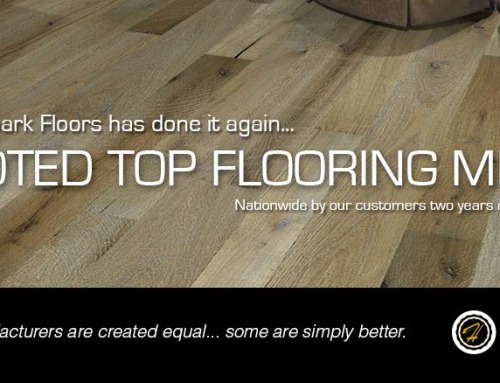
White Oak Flooring
Why This High-End Trade is a Forever Investment
In the world of American homeownership, few things carry the same weight—both literally and figuratively—as the floor beneath one’s feet. For an ordinary homeowner, the transition from builder-grade carpet or clicking laminate to a genuine oak hardwood floor is more than just a renovation; it is a rite of passage. It marks the moment a house stops being a temporary dwelling and begins its journey as a legacy. In the high-end U.S. flooring market, the choice between solid and engineered oak isn’t just a matter of “real” versus “manufactured.” Instead, it is a nuanced decision about structural integrity, regional climate, and long-term financial wisdom.
To understand why oak remains the undisputed king of the American interior, one must look at both its physical properties and its cultural status. Oak, particularly White Oak and Red Oak, has been the backbone of American architecture for centuries. It is a dense, “honest” wood. It doesn’t pretend to be something it isn’t. When you walk across a high-end oak floor, there is a specific acoustic resonance—a solid “thud” rather than a hollow “clack”—that communicates quality to the subconscious. In the high-stakes world of U.S. real estate, this “sound of quality” translates into cold, hard cash. Industry data consistently shows that hardwood floors can provide a return on investment (ROI) of up to 118% or more, often being the single most influential factor in how quickly a home sells.
The Prestige of the Plank: Solid vs. Engineered
For the purist, solid oak is the ultimate trophy. A solid 3/4-inch plank is a singular piece of timber from top to bottom. Its primary allure is its immortality. A solid oak floor can be sanded down and refinished half a dozen times over a century. It is a floor that your grandchildren could potentially walk on, having been changed from a dark espresso stain to a light Scandinavian blonde three times over in the interim.
However, the “high-end” label in the 21st century has expanded to include premium engineered hardwood, a shift driven by both necessity and technological brilliance. In many parts of the U.S., from the humid Gulf Coast to the bone-dry winters of the Northeast, solid wood has a natural enemy: relative humidity. Wood is a sponge; it expands when it’s wet and shrinks when it’s dry. This leads to “cupping” (where the edges of the planks rise) or “gapping” (where unsightly cracks appear between boards).
This is where the engineering of a high-end product becomes a worthwhile investment. A premium engineered floor isn’t “fake” wood; it is a sophisticated sandwich of real wood. It features a thick top “wear layer” of genuine oak bonded to a multi-ply core of high-quality birch or eucalyptus. These layers are stacked in cross-grain patterns, meaning each layer pulls against the other, canceling out the natural urge of the wood to warp. This “dimensional stability” allows homeowners to install wide, 7-inch or 10-inch planks—the hallmark of a luxury home—without the fear that the floor will buckle after the first summer thunderstorm.
The Hallmark of Excellence: Why Brand Matters
In this industry, the name Hallmark Floors carries a specific kind of gravity. They are often cited as a gold standard because they bridge the gap between old-world craftsmanship and modern chemistry. For an ordinary homeowner, a brand like Hallmark represents “insurance” against the pitfalls of cheap imports.
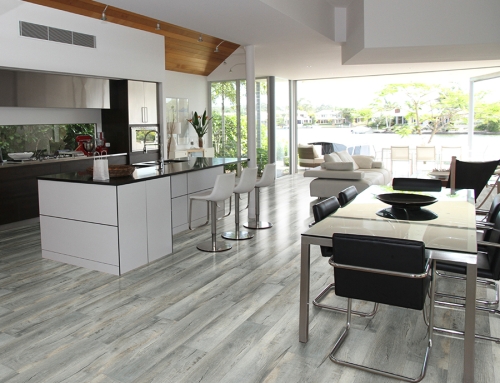
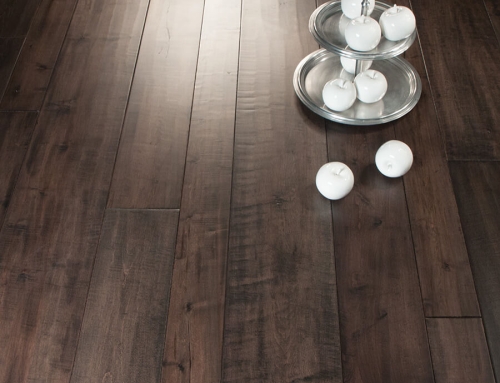
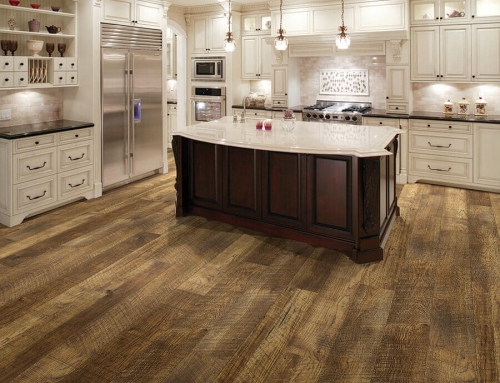
One of the reasons Hallmark is considered a high-end leader is their approach to the “face” of the wood. Many budget engineered floors use a “rotary peel” method—essentially putting a log on a giant pencil sharpener—which creates a repetitive, unnatural grain pattern. Hallmark, conversely, utilizes “sliced” or “dry-sawn” veneers. This mimics the exact look of solid wood because it is cut the exact same way. When you look across a long expanse of a Hallmark Alta Vista or Organic collection floor, you see the authentic “cathedrals” and flecks of the grain that only nature can produce.
Furthermore, Hallmark’s finishing technology, such as their TrueMark® Glaze Tek, provides a finish that is incredibly tough but doesn’t look like a sheet of plastic. In the luxury market, the goal is a “low-luster” or matte finish. High-gloss floors are out; they show every scratch and piece of dust. A high-end matte finish hides the wear and tear of daily life—the dog’s claws, the dropped keys, the moved barstool—while highlighting the texture of the oak.
The Economics of the “Forever Floor”
Why is this a worthwhile investment for you, the homeowner? It comes down to the “cost per year” versus “upfront cost.”
A cheap laminate or luxury vinyl plank (LVP) might cost $3 to $5 per square foot. It looks great for five years. But eventually, the plastic wears thin, the joints break, or the style becomes hopelessly dated. Because it cannot be sanded or refinished, the entire floor must be ripped out and sent to a landfill. You are then paying for labor, materials, and disposal all over again.
An engineered or solid oak floor from a reputable company like Hallmark might cost $10 to $18 per square foot installed. It is a significant “ouch” to the bank account upfront. However, twenty years from now, when the floor looks a bit tired, you don’t throw it away. You spend a fraction of the original cost to have a professional sand it down. You can change the color to match the latest trends, and suddenly, you have a brand-new floor again. This cycle can repeat for decades.
In the U.S. market, buyers are increasingly savvy. They can spot a “flipper’s floor” (cheap LVP) from the front door. When they see wide-plank oak, they see a home that was built to last. They see a homeowner who cared about quality. This perception of “permanence” is what drives up the appraisal value of the property.
Sustainability and the American Home
Finally, there is the ethical and environmental dimension of the investment. Oak is a sustainable resource in North America, with forest management practices that ensure more trees are planted than harvested. Furthermore, because these floors last for generations, they are inherently more “green” than synthetic products that need replacing every decade. High-end manufacturers like Hallmark also prioritize indoor air quality, ensuring that the glues and finishes used don’t “off-gas” harmful chemicals into your living room.
Conclusion
Investing in high-end oak flooring is an exercise in choosing the “long game.” It is about understanding that your home is both a sanctuary and a retirement account. By selecting a product that offers dimensional stability, authentic aesthetics, and the ability to be restored rather than replaced, you are making a decision that pays dividends in daily enjoyment and future resale value. Whether it’s the timeless reliability of solid oak or the architectural versatility of a Hallmark engineered plank, you aren’t just buying a floor—you’re buying the foundation of your home’s legacy.